
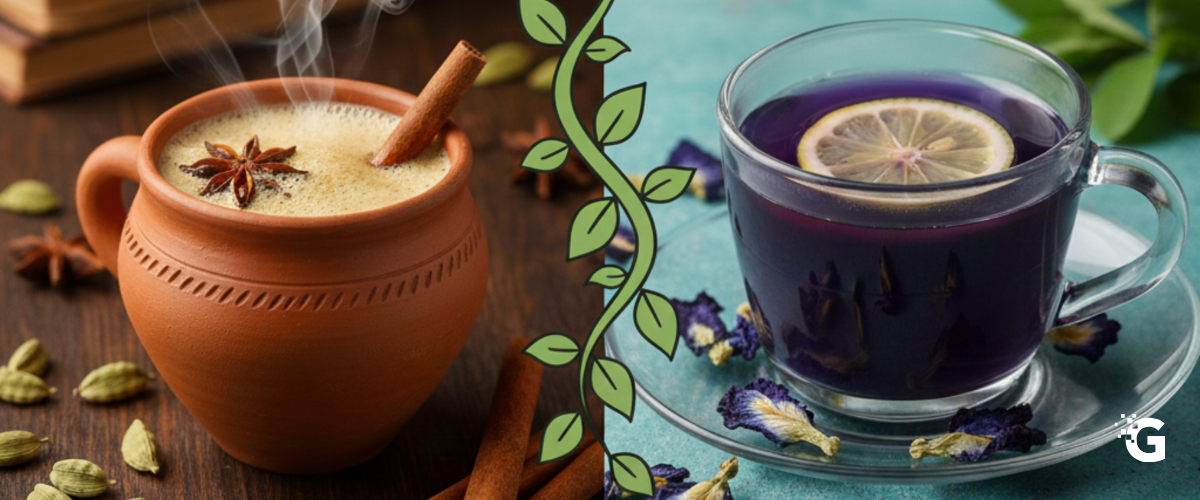
Traditional chai and aparajita tea represent two distinct approaches to herbal beverages in Indian culture. Chai relies on black tea and spices for its profile, while aparajita tea derives from the aparajita flower of the aparajita plant. This comparison examines their preparation, taste, nutritional content, and health effects to determine suitability for health-focused consumption. The analysis draws on established properties of their ingredients.
Composition of Chai
Chai consists of black tea leaves brewed with milk, water, and spices such as ginger, cardamom, cinnamon, cloves, and black pepper. The process involves boiling water with tea and spices, adding milk, and simmering until the mixture thickens. This yields a robust drink with approximately 40-70 mg of caffeine per cup.
The spices contribute specific effects. Ginger supports digestion by reducing nausea and inflammation. Cardamom aids in relieving bloating and may lower blood pressure. Cinnamon helps regulate blood sugar levels. Black tea provides catechins, antioxidants that support cardiovascular health by potentially reducing cholesterol. However, added milk and sugar increase calorie content to 100-150 per serving, along with saturated fats.
Composition of Aparajita Tea
Aparajita tea uses dried aparajita phool or aparajita ke phool from the aparajita plant, a climbing vine native to tropical regions. Steep one teaspoon of flowers in hot water for 5-10 minutes, then strain. The infusion turns deep blue due to anthocyanins, shifting to purple with lemon juice. It contains no caffeine and fewer than 5 calories per cup.
The aparajita flower has been documented in Ayurveda for its properties. Anthocyanins act as antioxidants, combating oxidative stress. The tea supports eye health by improving vision and reducing strain. It functions as a mild diuretic, promoting detoxification.
Taste and Sensory Profile
Chai delivers a bold, spicy flavor dominated by ginger’s sharpness and cardamom’s warmth, complemented by milk’s creaminess. The aroma is strong and pervasive during preparation.
Aparajita tea presents a milder, earthy taste with subtle floral notes. The visual appeal of its blue color distinguishes it, though the flavor lacks chai’s intensity. Some preparations incorporate lemon or honey to enhance palatability.
Health Benefits Comparison
Both beverages offer benefits, but their strengths differ. Chai excels in digestive support through its spices, which alleviate common issues like indigestion. Its antioxidants from black tea contribute to heart health.
Aparajita tea provides higher antioxidant levels from aparajita phool, supporting brain function, memory, and stress reduction. It aids weight management as a zero-calorie option and stabilizes blood sugar due to its low glycemic impact. For skin health, it promotes collagen production.
Aspect | Chai (with milk & sugar) | Aparajita Tea (plain) |
Calories | 100-150 | 0-5 |
Caffeine | 40-70 mg | 0 mg |
Antioxidants | Moderate (catechins) | High (anthocyanins) |
Primary Benefits | Digestion, circulation | Detox, mental clarity |
Suitable For | Daily energy | Weight control |
Chai suits those needing warmth and stimulation, while aparajita tea benefits those prioritizing low-calorie, calming effects.
Potential Drawbacks
Chai’s tannins may inhibit iron absorption when consumed with meals. Excess spices can irritate sensitive stomachs, and caffeine may disrupt sleep. Milk adds dairy-related concerns for lactose-intolerant individuals.
Aparajita tea poses fewer risks but may cause nausea in large amounts. Pregnant individuals should consult a physician due to potential hormonal effects from high doses. Allergies to the aparajita plant are uncommon but possible.
Limit intake to 1-2 cups daily for either to avoid issues.
Preparation and Sourcing Guidelines
Source dried aparajita phool from reliable suppliers to ensure purity. The aparajita plant thrives in pots with moderate watering, producing flowers seasonally. For chai, select fresh spices to maximize potency.
Determination of Superiority
Neither chai nor aparajita tea is universally superior; selection depends on health goals. Chai supports digestive and circulatory needs, while aparajita tea excels in antioxidant protection and weight management. Incorporate both based on daily requirements for balanced consumption.